Wednesday, October 2, 2013
The Ladies Man (Jerry Lewis, 1961)
Excerpt from a work in progress. So you'll have to excuse some messiness.

Thursday, August 15, 2013

Friday, August 31, 2012
On Dangerous Ground (Nicholas Ray, 1952)
There was theatre (Griffith), poetry (Murnau), painting (Rosselini), dance (Eisenstein), music (Renoir), Hencefort there is cinema. And the cinema is Nicholas Ray.
--Jean-Luc Godard on Bitter Victory (1957)
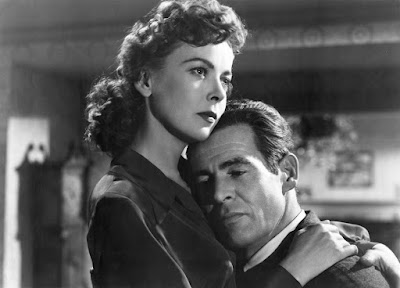
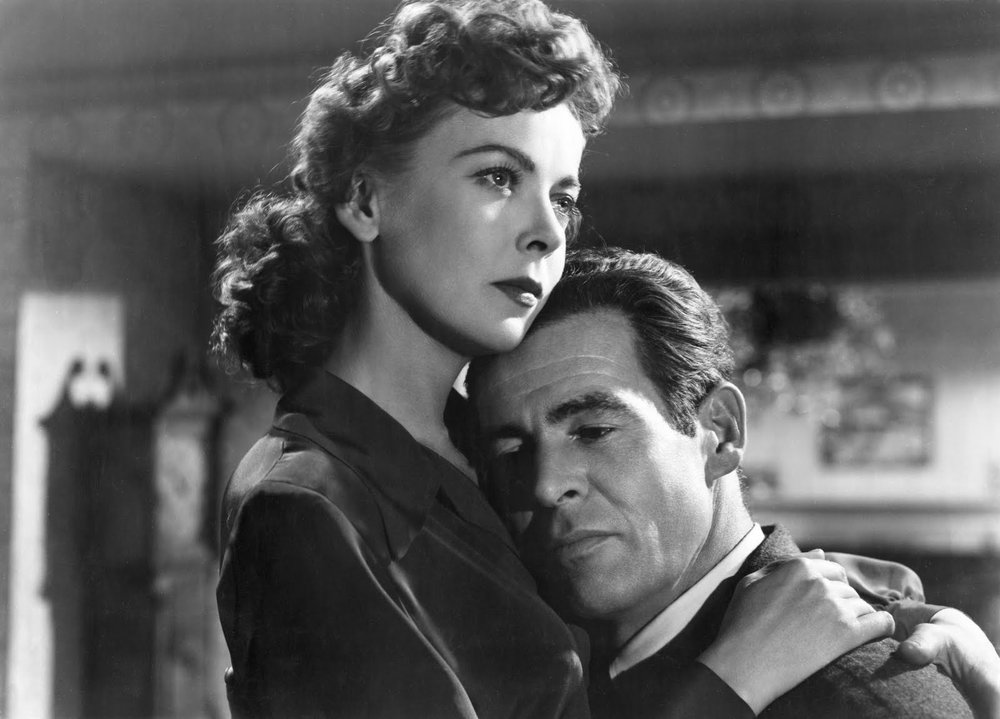
We don’t talk enough these days about Nicholas Ray.
I can’t recall watching any of his films in class, which is a shame. Ray’s films are startlingly modern, his innovations, while subtler, are as radical as those of Citizen Kane and less schematic. He is perhaps, along with Howard Hawks[1], the greatest director America ever produced.
With Ray, American narrative cinema for the first time breaks free from the nineteenth century theatre in a way that it hadn’t with any other American director except for Buster Keaton. Ray's films such as Johnny Guitar and In A Lonely Place, are at once unsentimental and brutally romantic, filled with a cinematic exuberance while fatalistic about existence. He is equally at home in both adolescent and middle-aged angst. No wonder the nouvelle vaguers idolized him.
I can’t recall watching any of his films in class, which is a shame. Ray’s films are startlingly modern, his innovations, while subtler, are as radical as those of Citizen Kane and less schematic. He is perhaps, along with Howard Hawks[1], the greatest director America ever produced.
With Ray, American narrative cinema for the first time breaks free from the nineteenth century theatre in a way that it hadn’t with any other American director except for Buster Keaton. Ray's films such as Johnny Guitar and In A Lonely Place, are at once unsentimental and brutally romantic, filled with a cinematic exuberance while fatalistic about existence. He is equally at home in both adolescent and middle-aged angst. No wonder the nouvelle vaguers idolized him.
On Dangerous Ground is a picture that speaks volumes within its frames. The bleary opening shots of New York City over a Bernard Herrmann score anticipate Taxi Driver by nearly a quarter century. They signify Robert Ryan’s Jim Wilson’s alienation from both his environment and work that have degraded his soul, setting him up to be reborn in the jagged whiteness of wintry Colorado playing upstate New York.[2] Ray elicits the tenderness within Ryan’s ferocity with the same delicacy with which Eric Rohmer elicited the kindness in Trintignant’s reticence, in My Night At Maud's.
Ground starts with a traditional Robert Ryan role, introducing his Jim examining mug shots alone in his spartan apartment. His calm exterior masking an inveterate rage at the city, criminals, and his peers. This is a man who is incapable of compartmentalizing. This is a man who has internalized the violence that surrounds him. What makes the story unique though, is that the story of is less about redemption or growth, but about healing.
Ground starts with a traditional Robert Ryan role, introducing his Jim examining mug shots alone in his spartan apartment. His calm exterior masking an inveterate rage at the city, criminals, and his peers. This is a man who is incapable of compartmentalizing. This is a man who has internalized the violence that surrounds him. What makes the story unique though, is that the story of is less about redemption or growth, but about healing.
Initially, the film’s narrative structure feels unwieldy. The film's first act is all character exploration. We follow Jim as he does his job, and come to understand just how deeply alienated he is. Then the film takes him to the snowy north. Ray uses this time to set up elements in both the mise-en-scène and the action that will be contrasted by the legato second section. This is especially apparent in two contrasting scenes of interrogation. The first in which Jim uses a mask of kindness to elicit information from a prostitute about the location of her abusive boyfriend, and in the second where the mask becomes a reality in the alien space of Ida Lupino’s blind Mary Malden's living room.[3]

As he recognizes her blindness, his eyes open to the moral gray area he has entered. What begins as an interrogation slowly turns into a narrative of mutual self-examination. The camera traces the actors’ movements throughout the living room. While this stifling urban "city" is portrayed in stark perpendicular lines, Mary's living room is filled with broken rococo surfaces and talismanic objects (the tree that grows in the center of the living room, a piece of wood, a small bust and a hanging plant). Ray portrays Mary's space as tactile rather than visual[4] and has Jim adapt himself to this alien situation. His Manichaean perspective ebbs away and rediscovers his empathy as he adjusts to the delicate asymmetry of a new space.

As he recognizes her blindness, his eyes open to the moral gray area he has entered. What begins as an interrogation slowly turns into a narrative of mutual self-examination. The camera traces the actors’ movements throughout the living room. While this stifling urban "city" is portrayed in stark perpendicular lines, Mary's living room is filled with broken rococo surfaces and talismanic objects (the tree that grows in the center of the living room, a piece of wood, a small bust and a hanging plant). Ray portrays Mary's space as tactile rather than visual[4] and has Jim adapt himself to this alien situation. His Manichaean perspective ebbs away and rediscovers his empathy as he adjusts to the delicate asymmetry of a new space.
Once removed from the tyrannically rigid city and placed in Mary's openly free-flowing home, even if for a few days, he begins to transform and heal.
Ray’s unique sensitivity to environment is what elevates his work to greatness. Much is made of his architectural background (he was a pupil of Frank Lloyd Wright). But this understanding is much broader and totally filmic. His sensitivity to space and character are not two separate facets of his genius, but the same. He sees so clearly how environments can both express and transform characters as well as be transformed by them. Once seen who can forget James Mason on the stairs, the way James Dean, Natalie Wood, and Sal Mineo create a makeshift familial space in a decaying mansion, or Humphrey Bogart and Gloria Grahame forming a bond across the Hollywood courtyard before they even speak to each other. Ray’s craft goes deeper than a mastery of mise-en-scène. The inner space of Ray’s characters is defined or expressed by their environs. They are their environs.
On Dangerous Ground isn’t Ray’s greatest work but it is representative and therefore utterly brilliant.
On Dangerous Ground isn’t Ray’s greatest work but it is representative and therefore utterly brilliant.
[1] Both of them Midwesterners, natch; so I guess that’s a win for flyover country.
[2] Calling to mind the nothing so much as the opening of Larisa Shepitko’s The Ascent.
[3] I want to note what a marvelously perverse choice it is to cast Lupino, so known for the expressivity of her wide eyes as a blind woman. Her airily stylized performance creates a special tension when paired with Ryan’s brusque naturalism.
[4] Note the way that Lupino touches the hanging plant when she enters the room.
Sunday, August 26, 2012
Wednesday, August 1, 2012
The Dark Knight Rises (Christopher Nolan 2012)
In which I pay my dues to the zeitgeist…
At a key point in The Dark Knight Rises the villains take
the Gotham City stock exchange hostage, in order to upload some kind of program
that will make some kind of sale that will fuck up Bruce Wayne/Wayne Enterprises.
The details of which escape me--and I saw this picture like two hours ago.
Anywhoo, these shenanigans leave Bruce Wayne without a penny to his name,
except for maybe tangible assets to the tune of…let’s say…eight figures.[i]
This all leads to a pretty sweet chase scene where Batman reemerges like Kaneda
in Akira on that bike with the wheel
that spins sideways when it needs to make a fast turn, and makes me happy
whenever it does that. The point is though this is a stupid way to ruin
someone. If the entire stock exchange was raided by a super terrorist I’m
pretty sure that would invalidate any trade made that day. Also, unless it’s
the middle of winter it seems like by the time the program finishes loading the
trading would have closed. This bothered me until I forgot about it because of
the cool motorcycle doing that thing I just mentioned, but then bothered me again
whenever it was mentioned. Usually this kind of thing doesn’t bother me. For
example, I wasn’t bothered by the fact that Prometheus
didn’t make a lick of sense and just enjoyed as it snowballed into a giant
avalanche of crazy awesome. I bring this up though because Christopher Nolan’s pictures
demand that you analyze them narratively and marvel at how clever he is.
Basically, Nolan is a director who dumb people think is sophisticated. His
films play with extended narrative gamesmanship. But his method never surpasses
the merely clever. I’m inclined to say that his is the cleverness is of a
crossword puzzle maker, but the fact is that his is closer the cleverness of a
sudoku creator. It’s all in the larger story-arc. So while he has an interest
in a syuzhet[ii]
he has no interest in the mechanics of the fabula. So the example above
demonstrates how at a scene-by-scene level his films don’t stand up to
scrutiny. Aesthetically and narratively, there’s simply no there there.
The thing is though I actually liked this movie while I was watching it.3 Then again. Batman
is basically Jesus, James Bond, and Phillip Marlowe all rolled into one.
Nolan’s big innovation is basically to take Batman seriously. Which is not to
say as some critics do that his interpretation of Batman is realistic or
gritty—does gritty even mean anything at this point? Rather, that as a mythical
figure he represents…err…something. But
there’s a lot to enjoy; Imax, Batman punching people and taking out criminals,
the motorcycle, that opening kidnapping (which again, makes no sense)
especially that one part where the plane falls away and Bane and the scientist
dude are just hanging over the landscape, etc. The thing is though that the
film leaves a bad aftertaste. It just thuds along in the thrall of its own
lugubrious crypto-fascism. Not just in content but in form. The fast-cutting,
giant Imax imagery, and marshaling score crush the viewer’s critical faculties
into a not entirely unpleasant but still pernicious puree. Its moments of
pleasure come, not from human moments, but the work of technicians. Its appeal
is pornographic. There’s no room in these films for sensuousness or pleasure that
comes from the mechanics of a heist, fight, or a conversation. But then again
what should I expect from a tent-pole superhero movie? Well, how about Batman
doing some goddamn detecting? He is after all, along with being the Dark
Knight, the World’s Greatest Detective. How about a villain with a coherent
(not necessarily logical or realistic) scheme to bring Gotham to its knees? How
about a Batman movie where every dialogue exchange didn’t involve some
character expositing the films empty themes? Nolan gets away with it though because
American cinema is so enraptured with perpetual adolescence that his own
adolescent[iii]
signifying is taken seriously. Christopher Nolan isn’t the auteur we need. He’s
the auteur we deserve.
Come at me nerds!
Wednesday, July 11, 2012
Love Exposure (Shion Sono, 2008)
I’m a fan of long movies. For one, it makes you feel like you’re getting your movie moneys worth. For two, it provides the viewer with a fully engrossing experience. Which is why it’s worthwhile in our age of ‘cool’ media to occasionally devote three to five hours to a picture such as this, or say Lawrence of Arabia, Carlos, Histoire(s) du Cinema, and to watch it in one sitting.1 Anyway, this is basically a disclaimer to say that I’m predisposed to take a shine to a nearly four hour Japanese romantic comedy (the director’s own description). You should be too though, because this picture is like five movies in one, often all at the same time. An incomplete list of elements and themes this movie includes: Jesus as pop-star, kung-fu, up-skirt photography (panchira), Kung-fu panchira, coming of age, familial trauma, cross-dressing, cults,and castration. If this picture seems—on description—to be merely a crazy grab bag of inchoate ideas. It isn’t. The characters are grounded, despite their rather extreme neuroses, in credible trauma. For all its tangents, break-neck pacing, and whiplash tonal shifts the film ends up being a serious and seriously moving exegesis of Corinthians 13. In the rather desolate landscape that is the contemporary romantic comedy; where love is equated with consumerism, divorced from any moral universe. Where sentimentality is equivalent to romance. Where shoe mad shrews fall for gym rat man-boys. Love Exposure provides hope for the future of this stagnating genre. Simultaneously, it succeeds in my least favorite genre2 the cumming-of-age story (I even hated Adventureland, because my heart is two sizes too small). Love Exposure ultimately works so well because, as in Paul’s letter to the Corinthians, it ties love not to grand romantic gestures (although the film contains plenty of those) but to selflessness. That to love as an adult is to take responsibility for that love. Not to revel in mutual neuroticism and shared taste in awesome bands, but to overcome selfishness in order to be with another person. Not to possess, but to see face to face. Which is work. The picture’s conclusion, while positive, provides no pat happily ever after. It portrays beginning the work of being together. The protagonists, at the end, see face to face, which makes the final romantic gesture affecting and moral. In conclusion; Stanley Cavell would dig this picture.
1You need a break to pee, or fix another scotch? Fine, you can have that. But did you ever think that maybe you wouldn’t have to pee so much if you didn’t spend the entire movie guzzling scotch? At least do it at a natural break in the film. Gawd!
2I have prejudices and they are legion.
Monday, July 2, 2012
Rio Bravo (Howard Hawks, 1959)
When people find out I’m a movie geek, they ask what my
favorite film is. I’ve come to the conclusion that I’m just going
to say Rio Bravo. This is at once
true and a lie of convenience. It’s true because it contains certain values of
cinema that are dear to me and seem in danger. It has a perspective on
masculinity that is still valuable (in its own way it is a film as mythic—if
not more so—than Ford’s The Searchers).
It is a film of totemic wisdom unadorned by sentimentality. Perhaps it will
convert someone to an initiate. Lastly, why not Rio Bravo? It is a lie though because to name a single film as my
favorite or even to name ten (or fifty) would be to deny the essential
pluralism of cinephilia. We don’t go to films for a single type of experience.
We take in films (and all art for that matter) in order to explore and deepen
our understanding of life. Which is not to say that I don’t believe that there
are objective categories with which to determine whether a work of art is “good.”
But, rather that to name one film as the best or even my favorite would be to
deny that very pluralism. The frame that we use in order to determine what is
the best compounds this problem. Breathless
is Jean-Luc Godard’s most important film. Although, I’m more partial to Jim
McBride’s interpretation. However, McBride’s picture is not as powerful or ‘great’
as Contempt, Masculin Feminin, Week End, etc. So while Godard’s Breathless may the most important film of the last sixty years, does
that mean it’s the best. Our
understanding of greatness is also determined by numerous historical factors:
availability, impact (“The first Velvet Underground album only sold
ten-thousand copies but everyone who bought it formed a band.”), critical
consensus, scope, ‘seriousness.’ The act of creating a canon, which is
essentially the function of these lists, flattens the discourse around an
entire medium. In doing so it not only denies the medium’s pluralism, but also
denies a pluralist discourse, critically and artistically, around that medium. The
thing is though; I love lists! I love
making them. I love reading them. I’m just all about lists, categorizing, indexing,
codifying, classifying, rating, evaluating, itemizing, enumerating. Lists lead
us to discover something new, especially the further down one goes. Lists lead
to arguments, or new avenues of thought which can be more valuable than the
list itself. Most of all though, lists are fun!
With this in mind I decided to create a list of the ten
greatest films of all time using Ignatiy Vishnevetsky’s method. The first time
I did it I felt that I had relied too much on what is considered canonical
alongside the films that I thought were the best. Or do I mean greatest? Or do
I mean favorite? On this go round I just decided to do it completely off the
top of my head, and imposing a time limit, and using a perpetually shifting metric that was different for each film:
- Five Easy Pieces (Bob Rafelson, 1970)
- A.I. Artificial Intelligence (Steven Spielberg, 2001)
- Carlito’s Way (Brian De Palma, 1993)
- Empire Strikes Back (Irvin Kershner, 1980)
- Notre Musique (Jean-Luc Godard, 2004)
- Contempt (Jean-Luc Godard, 1963)
- Mystery Train (Jim Jarmusch, 1989)
- Hard Boiled (John Woo, 1992)
- I Know Where I’m Going! (Michael Powell & Emeric Pressburger, 1945)
- The General (Buster Keaton & Clyde Bruckman, 1926)
Hey look at that the first four pictures were made under the
auspices of the movie brats. Well I couldn’t let the boomer hegemony stand so I
made another set of integers and came up with another list from the same master
list:
- Duck Soup (Leo McCarey, 1933)
- The Passion of Joan of Arc (Carl Theodor Dreyer, 1928)
- Winter Light (Ingmar Bergman, 1962)
- Vertigo (Alfred Hitchcock, 1958)
- Marriage of Maria Braun (Rainer Werner Fassbinder, 1979)
- Mystery Train (Jim Jarmusch, 1989)
- Holiday (George Cukor, 1938)
- They Live By Night (Nicholas Ray, 1949)
- A Matter of Life and Death (Michael Powell and Emeric Pressburger, 1946)
- Anchorman: The Legend of Ron Burgundy (Adam Mckay, 2004)
This one is more satisfying to me. Especially since it starts with Duck Soup is followed by two grave religious dramas and finishes
off with Anchorman. Neither list may
reflect any kind of canon, but the second one especially strikes me as a great
list.
Subscribe to:
Comments (Atom)